Categories
Events News

Exhibition: Related Beings. Cereals in Transition

The exhibition “Related beings: Cereals in transition” was inaugurated on 23rd of June 2023 at 12 pm as part of the annual ethnological summer symposium organized by the Frobenius Institute (FI).

The idea of the exhibition was developed by Peter Berger and René Cappers when they were at the FI as Mercator visiting professors between March and June 2023. Next to these two, the team realizing the exhibition consisted of Marius Heimer (technical support), Jennifer Markwirth (layout) and Peter Steigerwald (digitization of the photo negatives and slides / production and mounting of the prints).

The booklet accompanying the exhibition can be accessed here.

The Curators

Dr. Peter Berger

University of Groningen, Faculty of Theology and Religious Studies, Associate Professor of Indian Religions and the Anthropology of Religion

(Photo: Elmer Spaargen)
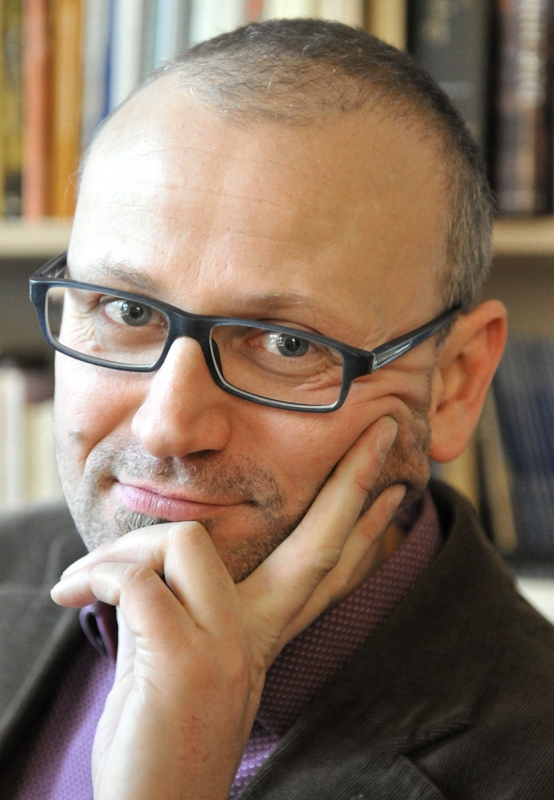
Prof. René Cappers

University of Groningen, Groningen Institute of Archaeology, Professor of Archaeobotany

(Photo: Private Source)

Exhibition Description

Cereals grow humans; termites cultivate fungi; a palm-tree nurses newborn human twins; an iron object becomes alive to ward off a sorcery attack; a female shaman (alias the earth goddess) uses her agricultural tools not for processing cereals, but to grind earth and pound dust; human blood is sprinkled over the soil and every kind of grain originates; termites evolve from cereals.

In their myths, rituals and agricultural practices, indigenous communities (Adivasi) inhabiting the highlands of Central India called the Eastern Ghats demonstrate the entanglement of a multitude of beings. Adivasi livelihoods based on the cultivation of rice and millets, especially finger millet, are currently the target of massive state interventions. Because of their nutritional properties, drought and disease resistance and low ecological footprint, millets have recently been discovered as the “smart food” for the future and 2023 has been declared as the UN International Year of Millets. Accordingly, state funded “Millet Missions” promote the cultivation, distribution and consumption of millets, also among the Indian urban middle classes.

As part of three international collaborative projects on “Cereal Cultures” (funded by the German Research Foundation (DFG) and the Dutch Research Council (NWO)) socio-cultural anthropologists and archaeobotanists investigate these ongoing dynamics between local cultivation practices and worldviews in relation to the policy measures of NGOs and the state, also against the backdrop of shifts in cultivation practices in the past.

This exhibition highlights some aspects of these processes. The sub-title “Cereals in transition” refers to different dimensions of transformations. First, farmers have been choosing between different kinds of grain since the beginning of agriculture, favoring at a certain moment in history one cereal over another. The specific properties and affordances of cereals have often been crucial in this selection process, for instance, with regard to the amount of labor that needs to be invested. Second, the current policy measures introduce new crops, new technologies, new food products and thereby transform local practices. Finally, “Cereals in transition” refers to the local worldviews of interrelated beings mentioned above, in which humans, animals and plants potentially and situationally transform into one another, especially in the domains of myth and ritual. The fundamental activity in this process is sacrifice, as it is blood that is the major catalyst and agent of transformation. From the local point of view, sacrifice and agriculture are necessarily intertwined in the attempt to navigate the flow of life.

The exhibition is currently open for viewings in the hallway of the Frobenius Institute at Frankfurt University (Ground Floor, IG Farben Building, Campus Westend).
Categories
Events

Book Launch, 11th of May 2023

On the 11th of May, 2023, our researchers Peter Berger and René Cappers launched their newest works at the Goethe University, Frankfurt.

Though not published as part of the ongoing Cereal Cultures research, two books by Peter Berger and René Cappers were presented and discussed in a public book launch at the Goethe University, Frankfurt. Both books deal with key-issues that are at the heart of the research of the Cereal Cultures network and the event demonstrated the relevance of interdisciplinary cooperation on such complex issues. Next to the numerous people present, several scholars joined online, for instance from Germany, the Netherlands, the UK and Australia. 

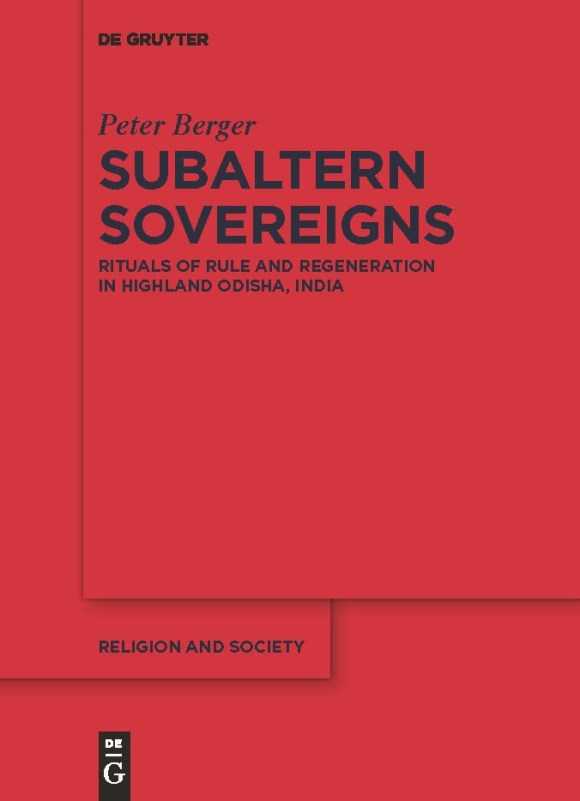
Berger, Peter (2023). Subaltern sovereigns. Rituals of rule and regeneration in Highland Odisha, India. De Gruyter. [Link]

Click here for a recent review.

The vast and ancient topic of kingship in India has mostly been studied from the perspectives of rulers and other elites. But what constitutes sovereignty viewed from “below”? This book — ethnographic and comparative in its essence — deals with indigenous conceptualizations of sovereignty taking as its starting point a local proverb that connects the ritual (Dasara) of the king with festivals performed by his “tribal” subjects. The first part of the book initially introduces some pan-Indian ideas of kingship and proceeds to discuss indigenous notions of sovereignty as represented in rituals and myths in the region concerned (highland Odisha). The second part is devoted to the investigation of the proverbial performances. Mainly based on historical sources first the Dasara festival of the king is discussed, subsequently the indigenous rituals are described and analyzed, which the author ethnographically documented around the turn of the millennium. Ultimately, the proverb and the rituals constitute the idea of a sacrificial polity in which rulers and ruled share sovereignty in the sense that they are co-responsible for the flow of life.

Discussants:

Roland Hardenberg, Frobenius-Institut für Kulturanthropologische Forschung an der Goethe-Universität Frankfurt am Main

and

Guido Sprenger, Institut für Ethnologie, Universität Heidelberg

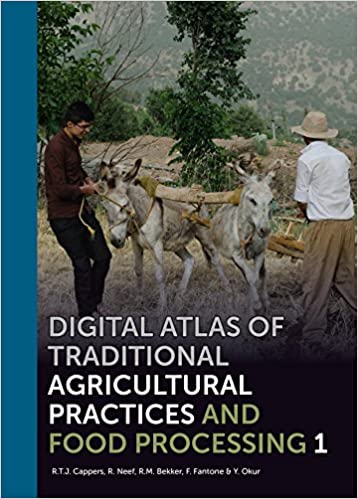
Cappers, René T. J., R. Neef, R. M. Bekker, F. Fantone & Y. Okur (2016). Digital atlas of traditional agricultural practices and food processing. Groningen Archaeological Studies 30. Groningen: Barkhuis and Groningen University Library. [Link]

Agriculture involves the production of crops and the breeding of animals, termed crop husbandry and animal husbandry, respectively. Traditionally, both kinds of husbandry were practised together, enabling people to benefit from all kinds of interactions among humans, plants, and animals. We briefly describe this symbiosis in the introductory portion of this book. In the chapters that follow, we discuss traditional agricultural practices and food processing primarily as they relate to crop husbandry. Agricultural practices and food processing deal with processes that may include different operations. In this book, we aim to define and describe these various processes unambiguously by taking into account the intention behind the process. We use a standardized
vocabulary that makes it possible to study all stages of crop production, crop processing, and food processing, irrespective of the kind of crop or its end product. Although our focus is on the processes, we inevitably also devote some attention to the underlying structures. It is our challenge to use this publication as a frame of reference for further research and to test whether our definitions and descriptions are in need of further improvement.

Discussants:

Katharina Neumann, Afrikanische Archäobotanik, Archäologie und Archäobotanik Afrikas, Goethe-Universität Frankfurt am Main

and

Alexa Höhne, Afrikanische Archäobotanik, Archäologie und Archäobotanik Afrikas, Goethe-Universität Frankfurt am Main

Categories
Events News

Berger & Cappers Mercator Visiting Professors in Frankfurt, March-June 2023

As part of the Cereal Cultures cooperation and the DFG project From ‘poor man’s food’ to ‘nutri-cereals Peter Berger and René Cappers visited the Frobenius Institute as Visiting Professors between March and June 2023. This enabled intensive discussions between the members of the Cereal Cultures network and included some highlights such as a book launch and the opening of an exhibition. 

More information can be found here.

Categories
News

Millets: ancient crops for the future

Text: Gert Gritter, Communication UG

Hunger, dehydration, impoverishment. It doesn’t take a prophet of doom to predict this as the future scenario for certain parts of the world. Millets might just be the solution. There is a good reason for the UN dubbing 2023 the International Year of Millets. UG researchers René Cappers and Peter Berger are trying to find out what is needed to promote the cultivation of these crops in India.

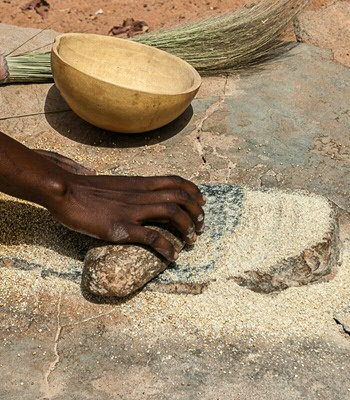
An african woman grinding cereals millet into flour using traditional grindstones, Burkina Faso

Not sexy

The majority of the Western population has never eaten millets. They are not particularly sexy crops. Strange really, because they taste fine, are easy to digest, gluten-free and simple to cook (like rice, but a shorter cooking time). They seem to have an image problem. The low status is largely because it’s seen as a food for poor people. For many years, millets have quite literally lost ground to other varieties of grain.

Not much water or fertilizer

This is a great pity as the about ten different species of grain collectively known as millets are ideal for dry, barren soil, where less robust alternative grains are unable to thrive. Millets don’t need much water or artificial fertilizer and can withstand hot and cold conditions. This is why the Groningen-based researchers Berger and Cappers have applied to the Dutch Research Council (NWO) for funding. In collaboration with colleagues from Frankfurt, they hope to understand the rise and fall of millet cultivation in the past and similar dynamics in the present.

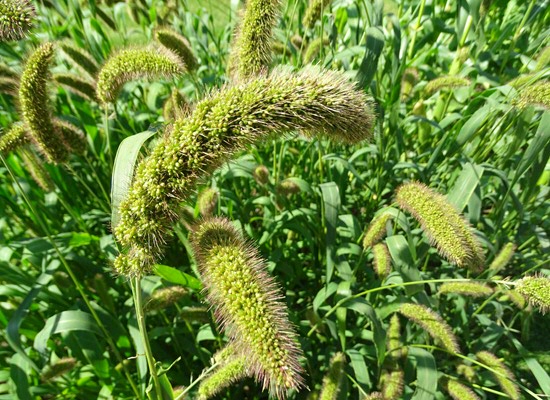
Millets: ideal for dry, barren soil.

Stereo research

Berger and Cappers come from different branches of academia, which makes them a highly suitable team. Berger is a cultural anthropologist, while Cappers is an archaeo-botanist. Whereas Berger has a synchronous focus on the people behind the crop (what the current situation is), Cappers’ primary focus on the crop behind the people is diachronous (how the situation has developed over the years). There’s a funny story about how they met. Berger was in London for an expert meeting, and was explaining that he was exploring the possibilities of millet. Suddenly, the host cried out: ‘You must know René Cappers then!’ They had never heard of each other and knew nothing about each other’s research, even though they only worked a few hundred metres apart.

Partners in crime

Berger and Cappers have something important in common; they are both multi-disciplinarians. Cappers combines his background as a botanist with archaeological research. He is interested in finding out which crops people have cultivated at various times and in various places, including food crops. The main focus of his work is on the development and distribution of farming in North-West Europe, as well as in the Near East and Sub-Saharan Africa. He now has an impressive collection of seeds and other plant material at his disposal. His partner in crime Berger is a social-cultural anthropologist, who works in the Faculty of Theology and Religious Studies. Berger is mainly interested in the way that people interact with food, along with rituals, cosmology and cultural-religious change.

Adivasi woman from Odisha winnowing finger millet (copyright P. Berger)

Highland people

Berger is involved in a long-term ethnographic study taking place in Odisha state, on the eastern coast of India. He is studying the tribal societies of the Adivasis. As they usually live in the remote higher reaches of India, they are commonly known as ‘highland people’.

Berger: ‘They are a marginalized ethnic minority in India, accounting for some 8% of the population. The word ‘‘minority’’ normally implies a small group of people, but everything is relative on a sub-continent with a population of over one billion. This is a highly diverse group of around 100 million people, widely dispersed across the country, and all with their own languages, cultures and religions. Berger spent two years living among the Adivasis in Odisha, learning their language and studying them first hand. He and Cappers are conducting their joint research in this same area.

Millet as children

Cappers and Berger hope that their research will allow them to make recommendations to the Indian government and NGOs about both policy and communication. Cappers: ‘We don’t just want to understand the dynamics behind the choice of food, but also the consequences of intervening in agriculture. In the past, the higher echelons encouraged the people to grow rice and wheat, in the interests of food security and India’s green revolution. But rice farming can have dire consequences for the environment and the landscape, because it requires so much water, for example. A knock-on effect is that culture and society suffer too. The key question is how to ensure that agriculture is sustainable in the long term.’ Berger adds: ‘The cultural dimension is especially important. It is a paradox that millets are now regarded as crop for the future, while de Adivasi are still considered by many lowlanders to be some kind of primitive stone age people. The animistic Adivasis see grains as non-human people, for example. They think and talk about millet as children and rice as bride. So it’s not just about increasing the yield, the nutritional value and filling stomachs.’

Future expectations

What do the researchers think about millet themselves? Cappers is very down-to-earth and prefers ‘ordinary’ food. But Berger ate it quite often while he was living in Odisha and learned to appreciate it: ‘They make a slightly fermented, very creamy, tasty gruel from it. People who work long days outside in the heat drink it twice a day. It provides them with energy and they don’t need to eat anything else then. They were amazed when they saw me drinking bottles of water all day long.’ Finally: what do they expect from millet as a grain in the future? Wearing his biologist’s hat, Cappers tends to think like a scientist. He can see the benefits of millet and various potential uses. Berger is more cautious as an anthropologist: ‘I’m afraid that the Indian government will opt for a top-down approach. Solutions will only succeed if you take the local population into account. It’s not a question of one size fits all…’