Categories
Events News

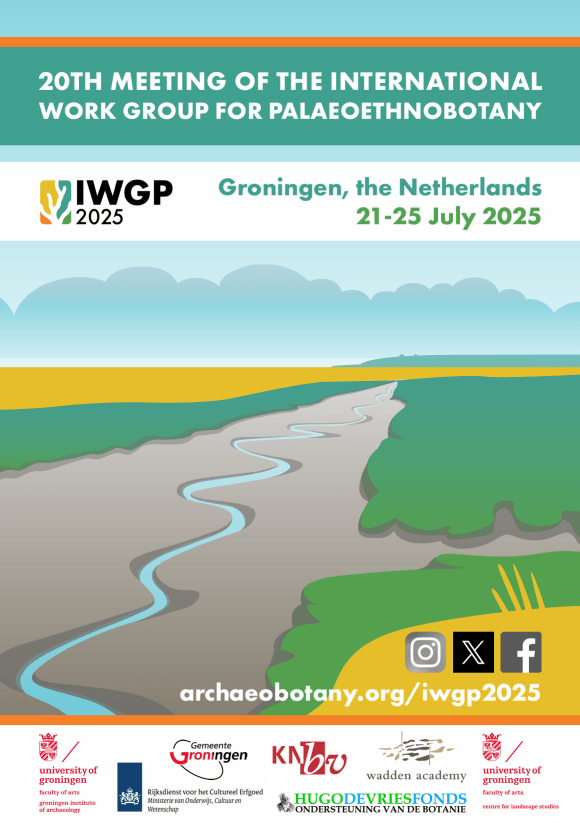
20th Conference of the IWGP in Groningen, the Netherlands

Following a successful meeting of the International Work Group for Palaeoethnobotany (IWGP) in České Budějovice, the 20th Conference of the IWGP is set to take place from July 21st-25th 2025 at the University of Groningen. The event is organised through a collaborative effort between the Groningen Institute of Archaeology, the Centre for Landscape Studies (University of Groningen) and the Cultural Heritage Agency (Ministry of Education, Culture and Science).

Further information on the conference programme, the scientific sessions, and more can be found here.

Categories
Events News

Presentation of New Documentary Film “Crops of Life: Cereal Cultures in the Highlands of Odisha”

At the annual Summer Symposium hosted by the Frobenius Institute, Frankfurt, budding young researchers are given the opportunity to showcase their projects via presentations and posters, followed by hearty discussions.

In 2025, the Summer Symposium took place at the 5th and 6th of June, and featured an extrodinary presentation: the first viewing of a documentary created by researchers of the Cereal Cultures project in a collaborative effort between production company Altair Films, Frobenius Institute and the University of Groningen.

View the full programme of the 2025 Summer Symposium below:

Categories
Events News

Workshop: Cereal Cultures – Exploring Past and Present Social and Economic Systems of Millet and Cereal Cultivation in India and Beyond

14-16 May 2025 / University College London & Royal Botanical Gardens, Kew

This interdisciplinary workshop brought together scholars from archaeobotany, anthropology, ethnobotany, and archaeogenomics to examine the social, ecological, and historical dimensions of cereal crops—particularly millets, rice, wheat, and barley—across cultural landscapes in Asia and Africa. Convened to foster critical dialogue on cereal assemblages across time, the event opened with introductory presentations by researchers from the University of Groningen (The Netherlands) and the Frobenius Institute (Germany), who shared findings from long-term ethnographic and archaeobotanical fieldwork in Odisha, India. Their contributions offered grounded case studies that situated staple cereals within local ritual, economic, and gendered practices, highlighting the socio-cultural frameworks through which cultivation and crop selection are shaped.

The first two days included presentations by archaeobotanists from UCL and scholars from the Royal Botanic Gardens, Kew, tracing the historical trajectories of cereal cultivation across Asia and Africa. Sessions focused on the development of cereal agriculture from the Iron Age to early historic periods in India, highlighting crop movements and culinary transitions across eastern and western regions. Comparative research from West and Northeast Africa illustrated transformations in cropping patterns and emphasized the roles of memory and heritage in maintaining cereal biodiversity.

On the final day at Kew, presentations demonstrated how herbarium specimens are valuable for tracing the evolution, environmental adaptation, and genetic diversity of rice. They also emphasized the essential role of linking archival, ethnographic, and laboratory research to conserve landraces and indigenous agricultural knowledge within an interdisciplinary framework.

The workshop concluded with a call to revisit herbarium and ethnographic collections—particularly the visual archives at the Frobenius Institute—as vital resources. Participants advocated for a multispecies perspective on cereal research that foregrounds so-called minor crops and their entanglements with soils, microbes, farm animals, termites, water bodies, and other life forms constituting broader agro-ecological systems. Emphasis was placed on participatory knowledge production, underscoring the importance of inclusive, accessible scholarship that bridges scientific inquiry with lived cultivation and consumption practices—through digital platforms and collaborations with governmental and civil society organisations working closely with cultivating communities.

Categories
Events News

Summer School: “Gods, Fields, Minds and Mines”, 16 to 22 June 2025 at the Goethe University ‘Guest House Bergkranz’ in Kleinwalstertal (Austria)

From 16th to 22nd of June 2025, scholars, PhD students, master’s and bachelor’s students from India, Germany and the Netherlands gathered at the stunning mountain retreat of Goethe University’s ‘Guest House Bergkranz’ in Kleinwalstertal, Austria. This summer school, jointly organised by the Goethe University Frankfurt/Frobenius Institute (Germany), the Indian Institute of Technology Delhi (India) and the University of Groningen (The Netherlands), consisted of interactive lectures on conversion, agriculture, education and extractivism in contemporary India. Although these subjects seem to be quite diverse, during the week it became clear that there is a common ground: the phenomenon of cultural change and the complexities and predicaments of contemporary lifeworlds of the Indigenous population (Adivasi) of Odisha, India.

The week opened with an introduction by the organisers, Prof Dr Roland Hardenberg (Goethe University Frankfurt) and Dr Peter Berger (University of Groningen), emphasizing the main goals of this summer school: to understand the entanglements between “Gods” (conversion), “Fields” (agriculture), “Minds” (education) and “Mines” (extractivism), build an academic network and discuss future research and study possibilities. The first two days were mainly dedicated to Indigenous agriculture when PhD students Ashutosh Kumar, Nidhi Trivedi, Suneet Kumar and Indhubala Kesevan presented their research on cereal cultures in Odisha, India, including the screening of the new documentary film “Crops of Life” (director Kunal Vohra/Altair Films), which is based on their research.

On Wednesday, the participants took a short break from lectures to enjoy a hiking excursion in the nearby Gemsteltal valley led by Dr Stefan Jocham and Anna Frehse, two regional experts working for the Kleinwalsertal tourism agency. During the excursion, the participants gained important insights into the history of the valley, the ecological challenges it faces and how the local communities are trying to achieve harmonious coexistence between people, animals and plants in this beautiful but fragile environment. On Thursday, the programme continued with lectures and discussions on mass education in Odisha — a relevant topic for understanding the activities of national and international mining companies. Dr James Narendra Bondla (Frobenius Institute) introduced the topic of the so-called factory schools in his lecture ‘Resource extraction and schooling in India’. Malvika Gupta, DPhil (University of Oxford, UK), then reported on her research on Indigenous movements in India and Ecuador in her presentation ‘State policies, extractive industries and Indigenous education: new mode of assimilation?’. Finally, the Indian activist Sharanya Nayak shared her experiences and her film ‘The Laboratory Project’ about local education in the tribal areas of Odisha.

Friday was reserved for seminars and discussions on the topic of cultural change. It began with Dr Peter Berger, who provided the theoretical framework from Marshall Sahlins’ work on ‘Theory of the Event’. This framework provided orientation for the participants in the subsequent discussions and in understanding and analysing cultural change. Dr Baktygul Shabdan (Goethe University Frankfurt) contributed to this theme with her presentation on cultural and religious change in post-Soviet Kyrgyzstan, followed by Aswino Gomango (Assistant Professor at Maa Manikeshwari University, Odisha), who reported on his research concerning the ‘Christian conversion and changing identity of the Saora Adivasi in the Highlands of South Odisha, India’.

Saturday morning was reserved for individual activities, such as climbing to the top of a nearby mountain, visiting a waterfall, short hikes or some souvenir shopping in the village. In the afternoon, the programme continued with brainstorming sessions and discussions on future research, advocacy and activism in cultural anthropology, as well as career and study prospects and publication strategies.

Between seminars, spread throughout the week, participating students prepared presentations on their own topics of interest and preliminary empirical research, which made the programme even more interesting and diverse. After an intensive, educational and entertaining week of seminars, discussions, sharing meals, drinks and after-dinner walks, the group enjoyed a breakfast together on Sunday morning before all setting off to travel back to their own ever-changing cultural worlds.

Sandra van Meel, Roland Hardenberg and Peter Berger

Categories
News The Religion Factor

New Series of Blog Posts on Cereal Cultures

Several members of the Cereal Cultures research team have co-authored a series of blog posts on “Millets: Ancient Grains, Global Policies, Local Lifeworlds”. These posts have been published in the blog The Religion Factor, hosted by the Faculty of Religion, Culture and Society of the University of Groningen.

Access the blog posts here.


Categories
Events News

Workshop: Cereal Cultures in South and Central Asia

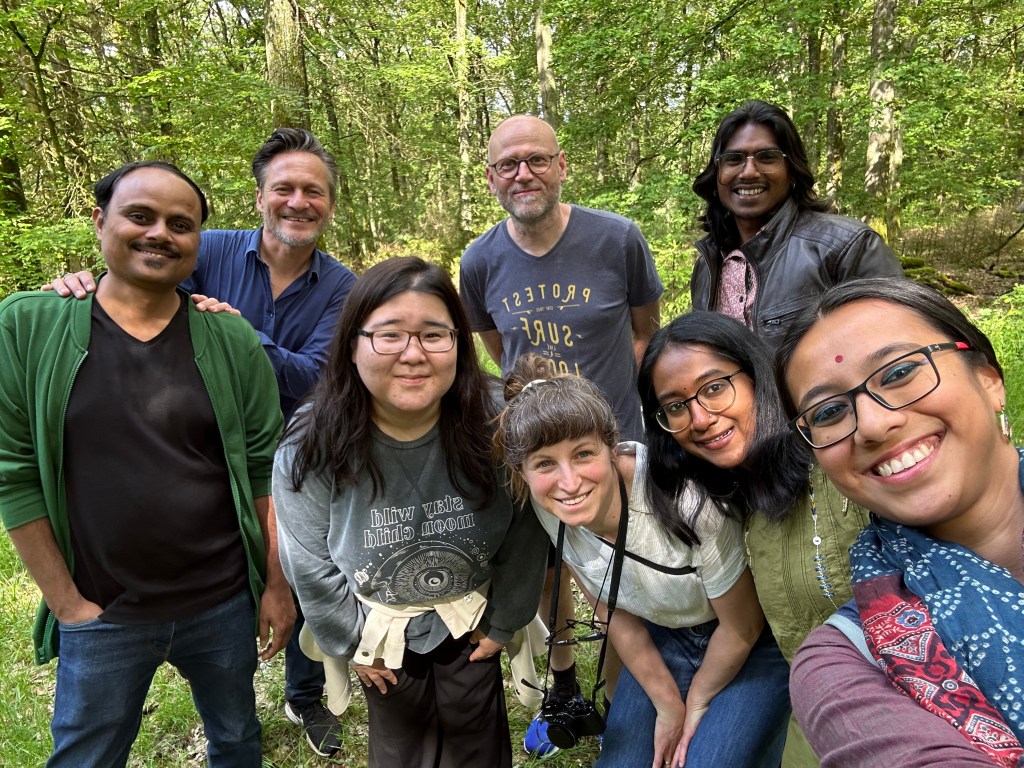
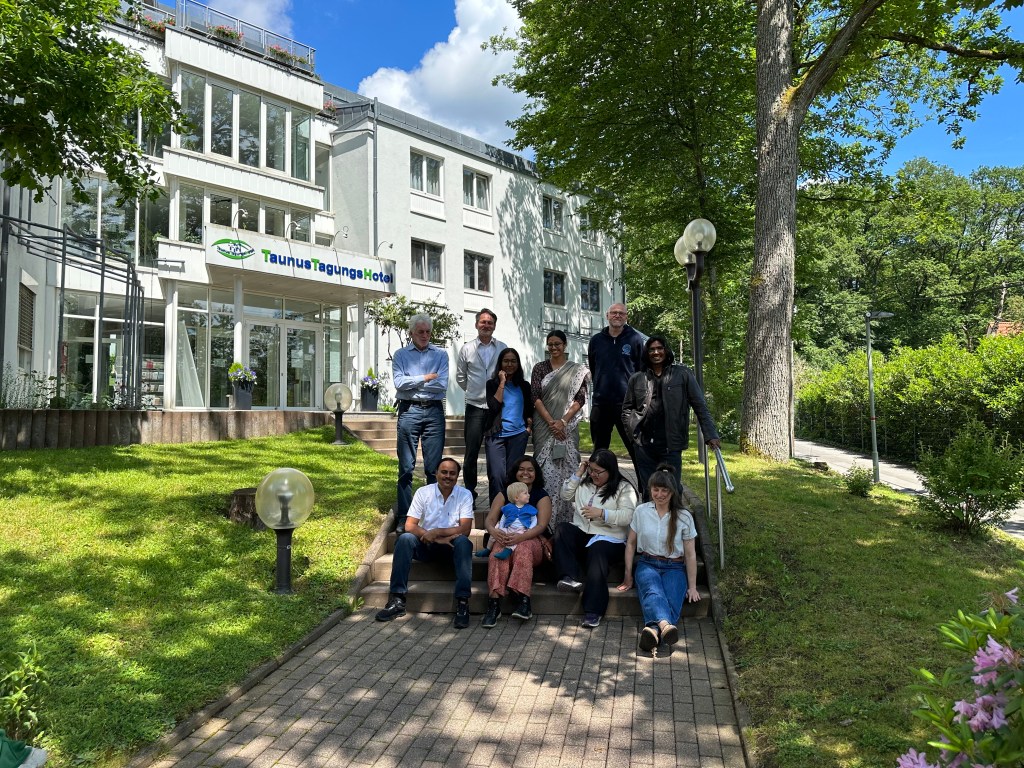
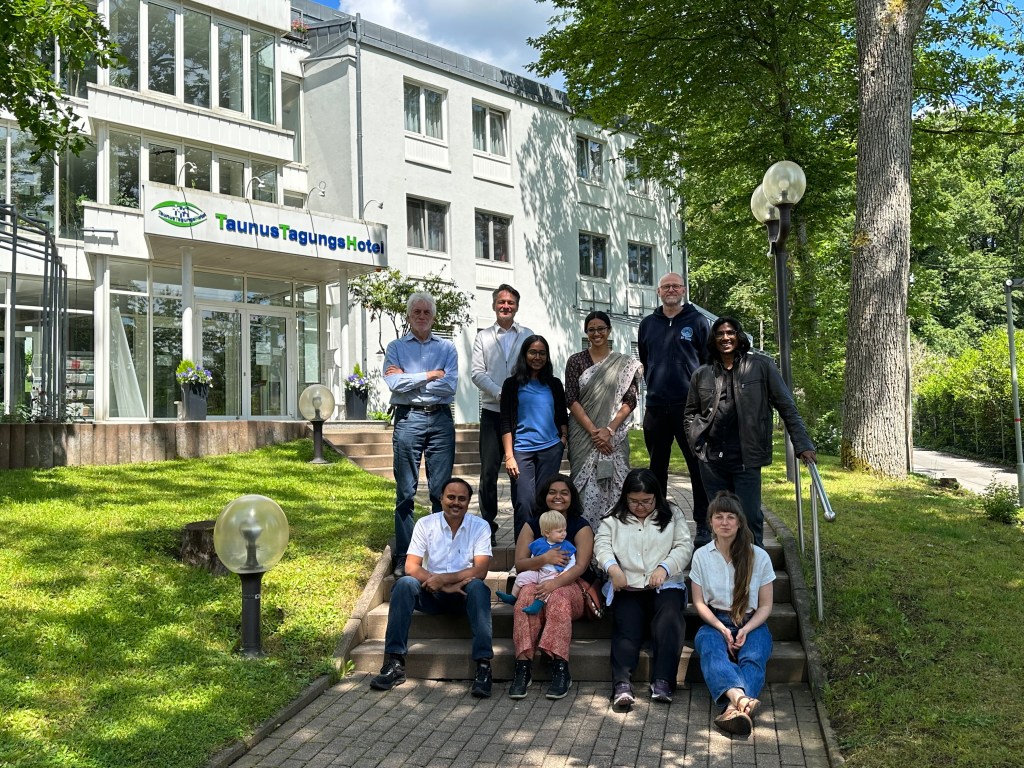
The Frobenius Institute for Research in Cultural Anthropology, in collaboration with University of Groningen, has organized an interdisciplinary workshop from 22 May to 25 May 2024 on the theme of “Cereal Cultures in South and Central Asia” at the Taunus Tagungshotel both online and in presence.

The workshop was attended by Prof. Dr. Roland Hardenberg (Frobenius Institute), Dr. Peter Berger (University of Groningen), Prof. Dr. René Cappers (University of Groningen) and Dr. Sonja Filatova (University of Groningen). The workshop was also attended by doctoral researchers from collaborative projects on Cereal Cultures ( SFB-1070, DFG, NWO) Indhubala Kesavan, Suneet Kumar, Shilanjani Bhattacharyya, Bijayini Mohanty, Ashutosh Kumar and Nidhi Trivedi.

The workshop focused on the results and findings of the ongoing PhD studies dealing with the current state of Cereals in South and Central Asia from anthropological as well as archaeobotanical perspectives. Several aspects of cereals in relation to local people who cultivate it and the implication of state led agro-economic policies on the cereals were enumerated and discussed. Some of the questions that were foregrounded in the workshop were:

What does a staple crop like rice or millet mean to the local people?
How does a staple crop like rice enable the communication of respect and in succession sustain social relationship between humans, and between human and gods?
How do current agro-economic policies and (money) market economy implicate the values and choices of the local people with respect to cereal cultivation?
How does archaeo-botanical perspective shed light on new dimensions of the cereals?

In addition, the discussions also brought focus on archaeobotanical sample collection and analysis, data management, the progress of ongoing documentary film on Cereal Cultures, planning of future publications, and conferences.

Categories
News

Dr. Sonja Filatova on the Archaeobotanical Collection of the University of Groningen and Ongoing Research on Cereal Cultures

Find the published news articles on the offical University of Groningen website here.

Categories
Events News

Panel: “Towards Collaborative Research on Cereal Cultures on South Asia”

As the European Conference for South Asian Studies (ECSAS) 2023 in Torino draws near (26-29. July, 2023), the presentations for our network’s panel, “Towards Collaborative Research on Cereal Cultures on South East Asia” have been released.

Convenors

Peter BergerInstiute of Indian Studies, University of Groningen, Groningen, Netherlands
Roland Hardenberg Frobenius Institute, Goethe University, Frankfurt, Germany
Sofia Filatova Groningen Institute of Archaeology, University of Groningen, Groningen, Netherlands

Panel Abstract

Cereals have been domesticated on almost every continent, and their cultivation and consumption have become fundamental components of food cultures around the world. Various changes in the spectrum of cultivation occurred over time, which had immense impacts on the respective communities. Contemporary choices will likewise influence future human trajectories. Awareness of declining crop diversity and agricultural practices, as well as the impact of climate change, has led to the promotion of nutritionally and environmentally beneficial cereal crops. In India, for example, the FAO-UN has declared 2023 as the “Year of Millets.” How exactly have changing grain preferences affected communities in the past? How does the current promotion of certain grains affect farming communities, their modes of production and consumption? How can we integrate past and current data on cereals to promote food security, food sovereignty, and biodiversity?

The goal of this panel is to understand the complexity of human engagement with cereals (e.g., crop selection, food production, crop competition). To this end, we consider symmetrical collaboration across disciplines and among different stakeholders to be essential. This raises the question of how plant research is influenced by regional or disciplinary traditions and by the multiple interdependencies between humans and cereals. We (anthropologists and archaeobotanists) invite contributions that address the various dimensions of cereal crops in South Asia (past and present) and, in conjunction, may reflect on potentials, challenges, and obstacles to multidirectional collaboration.

Presentations

Changing the narrative – moving beyond ‘proto-indica’ debates to think about the complexity of early rice use in India.
Bates, JenniferSeoul National University, Archaeology and Art History, Seoul, Republic of Korea

Agricultural diversification in Rural North-West India: Understanding Transitions and Its Socio-Ecological Implications.
Dalal, Anjali The University of Edinburgh, South Asian Studies, Edinburgh, United Kingdom

The maize fields of ‘Mini Swiss’: Tracing transitions in cereal farming among Tibetan refugees and host communities in southern Karnataka.
Geschewski, Hanna Chr. Michelsen Institute, Bergen, Norway

Combining archaeology, ethnography, and modelling to understand the historical depth of millet exploration in the Indus Valley.
Lancelotti, CarlaUniversitat Pompeu Fabra – ICREA, Humanities, Barcelona, Spain
Madella, MarcoUniversitat Pompeu Fabra – ICREA, Humanities, Barcelona, Spain

‘Millets in the Milieu’: Mapping socio-cultural change amidst surgin cash crop farming of millets and other crops among tribals of Odisha, India.
Mohanty, Bijayini Utkal University, Anthropology, Bhubaneswar, India
Kumar, Ashutosh University of Groningen, Faculty of Theology and Religious Studies, Groningen, Netherlands
Bhattacharyya, Shilanjani Goethe University, Frankfurt, Germany

Emerging valuations of cereal crops and their cultures in South and Central Asia.
Trivedi, Nidhi University of Groningen, Department of the Comparative Study of Religion, Faculty of Theology and Religious Studies, Groningen, Netherlands
Kesavan, Indhubala Goethe University, Frankfurt, Germany
Kumar, Suneet Goethe University, Frankfurt, Germany
Utetileuova, Togzhan Goethe University, Frankfurt, Germany

“We are cent percent wheat growers”: Production and Exchange Relations in Narmada Valley, India.
Arora, SunitAzim Premji University, Economics, Bangalore, India

Eating Millets in Autumn: Memories of Farming, Crops and Hunger in East Central India.
Sengupta, SohiniTata Institute of Social Sciences, Social Work, Mumbai, India
Categories
Events News

Exhibition: Related Beings. Cereals in Transition

The exhibition “Related beings: Cereals in transition” was inaugurated on 23rd of June 2023 at 12 pm as part of the annual ethnological summer symposium organized by the Frobenius Institute (FI).

The idea of the exhibition was developed by Peter Berger and René Cappers when they were at the FI as Mercator visiting professors between March and June 2023. Next to these two, the team realizing the exhibition consisted of Marius Heimer (technical support), Jennifer Markwirth (layout) and Peter Steigerwald (digitization of the photo negatives and slides / production and mounting of the prints).

The booklet accompanying the exhibition can be accessed here.

The Curators

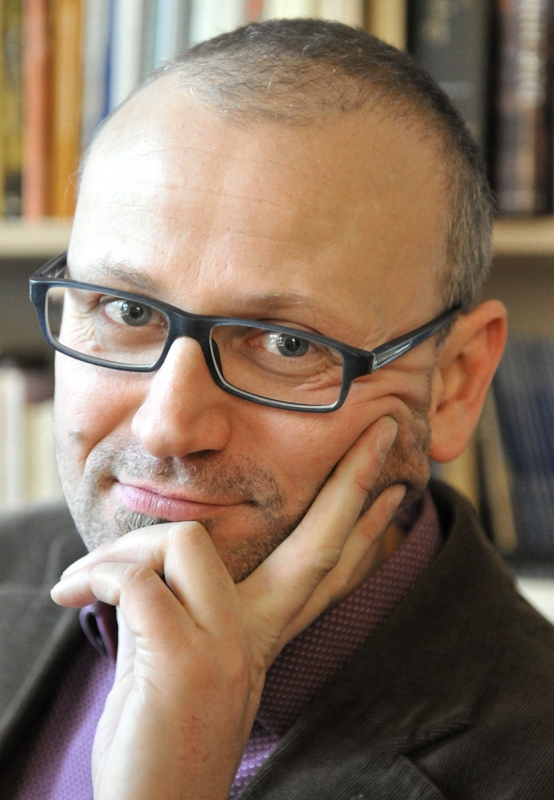
Dr. Peter Berger

University of Groningen, Faculty of Theology and Religious Studies, Associate Professor of Indian Religions and the Anthropology of Religion

(Photo: Elmer Spaargen)

Prof. René Cappers

University of Groningen, Groningen Institute of Archaeology, Professor of Archaeobotany

(Photo: Private Source)

Exhibition Description

Cereals grow humans; termites cultivate fungi; a palm-tree nurses newborn human twins; an iron object becomes alive to ward off a sorcery attack; a female shaman (alias the earth goddess) uses her agricultural tools not for processing cereals, but to grind earth and pound dust; human blood is sprinkled over the soil and every kind of grain originates; termites evolve from cereals.

In their myths, rituals and agricultural practices, indigenous communities (Adivasi) inhabiting the highlands of Central India called the Eastern Ghats demonstrate the entanglement of a multitude of beings. Adivasi livelihoods based on the cultivation of rice and millets, especially finger millet, are currently the target of massive state interventions. Because of their nutritional properties, drought and disease resistance and low ecological footprint, millets have recently been discovered as the “smart food” for the future and 2023 has been declared as the UN International Year of Millets. Accordingly, state funded “Millet Missions” promote the cultivation, distribution and consumption of millets, also among the Indian urban middle classes.

As part of three international collaborative projects on “Cereal Cultures” (funded by the German Research Foundation (DFG) and the Dutch Research Council (NWO)) socio-cultural anthropologists and archaeobotanists investigate these ongoing dynamics between local cultivation practices and worldviews in relation to the policy measures of NGOs and the state, also against the backdrop of shifts in cultivation practices in the past.

This exhibition highlights some aspects of these processes. The sub-title “Cereals in transition” refers to different dimensions of transformations. First, farmers have been choosing between different kinds of grain since the beginning of agriculture, favoring at a certain moment in history one cereal over another. The specific properties and affordances of cereals have often been crucial in this selection process, for instance, with regard to the amount of labor that needs to be invested. Second, the current policy measures introduce new crops, new technologies, new food products and thereby transform local practices. Finally, “Cereals in transition” refers to the local worldviews of interrelated beings mentioned above, in which humans, animals and plants potentially and situationally transform into one another, especially in the domains of myth and ritual. The fundamental activity in this process is sacrifice, as it is blood that is the major catalyst and agent of transformation. From the local point of view, sacrifice and agriculture are necessarily intertwined in the attempt to navigate the flow of life.

The exhibition is currently open for viewings in the hallway of the Frobenius Institute at Frankfurt University (Ground Floor, IG Farben Building, Campus Westend).

Categories
Events News

Collaborative Cultural Anthropology: Workshop “Cereal Cultures in Odisha”

Photo: Dr. Sanjaya Kumar Sarangi

As part of the close collaboration between researchers from three universities and research institutions in India (Utkal University), the Netherlands (University of Groningen) and Germany (Frobenius Institute at Goethe University), a workshop on “Cereal Cultures in Odisha” was held on the 10th of February, 2023 in Bhubaneswar, India.

In the presence of the Vice-Chancellor of Utkal University, Prof. Dr. Sabita Acharya, the first results of the joint research on the changing significance and handling of rice and millet were presented. The event also aimd to bring together participating scientists with government officials, NGOs and entrepreneurs to jointly discuss key issues related to the UN Year of Millet 2023. Plans were also discussed for the establishment of a shared archive for grain collected during the field research. A highlight was the ceremonial launch of the joint homepage, which will inform the public about the ongoing research projects: https://cerealcultures.wordpress.com/

More information about the workshop can be found here.